
From the beginning, spending three months in a country I’d never been to, where I didn’t speak the language, only knew one person, and had no idea how to get around sounded like a fantastic – yet terrifying – adventure.
And it was.
But I also knew I needed to prepare – not only to be there, but also to make sure things stayed functional back home so that I didn’t have to come home to chaos.
And that’s what this post is about. If you’re looking for plot, I’m sorry – this one isn’t for you (and it’s why there’s no video this week). But if you’re thinking about taking a similar adventure… or if thorough and intricate planning just gets you off… then here’s what I did to prepare for mine.
But before I go into anything, a quick disclaimer:
I’m writing about the things I did and the services I chose because they seemed like a good fit for my situation. I am not endorsing any person, service, or entity, and I’m not saying that ANY of these things will work for you. No one is paying me for my opinion.
And presumably, if you’re thinking about taking a trip like this, you’re a grownup. Make your own choices.
And now for… well… all the things:
The Passport
First thing’s first, I needed a passport. And actually, I set that in motion basically the month after I met the German guy. I truly had no idea that it would turn out like it did (if you’ve watched episode one, you know that). But it never hurts to be prepared. Or to have a passport. Even if you don’t use it to travel out of the country, you’ll have it so you don’t need a Real ID to get through airport security, you won’t have to present two forms of identification to HR when you start a new job, and it’s just a cool thing to have.
But seriously, if you’re planning to leave the country, get one of those. You won’t get far without it.
Global Entry
US Global Entry is an addon you can purchase from Customs and Border Protection that lets you bypass immigration when you return to the states. It requires an application and pretty extensive background screening (not surprising), a not-so-negligible fee, plus an in-person interview with CBP. Those are hard to get if you don’t live near a major airport that hosts them – and the slots that open at the bigger airports fill quickly, so if you manage to get an interview (which I did after a year of trying… and I had to drive four hours to get there), it’s like playing Roulette.
But once you have it, next time you enter the country, it’s like your Norm entering Cheers. You walk up to a screen, it scans your face, you don’t have to show your passport, and the agent behind the window knows your name and flags you through to baggage claim and customs.
TSA PreCheck
This is another perk that’s nice to have – and that comes with Global Entry. But you can also get it separately (and it’s cheaper than Global Entry). It requires another background check and everything (unless you do it along with Global Entry). And it works whether you’re flying internationally or domestically. If you’re tired of taking off all your clothes, unloading your electronics and putting them all into separate bins only to unload them again after someone behind a screen sees a virtual form of you in all your naked glory, then PreCheck is definitely for you. You won’t even have to take your shoes off.

Money

I knew I didn’t want to mess with the math of currency conversions. I don’t carry cash in America, and I didn’t want to deal with it there. Foreign Transaction Fees on a credit card also sounded like a really large, unnecessary expense – especially over an extended period of time – and so with a bit of research, I settled on a credit card that I’d use that didn’t have foreign transaction fees, so that the currency conversions would be handled automatically. It also came with a nice little travel bonus.
I can’t stress this enough – this solution isn’t for everyone. And if you’re someone who continually and habitually runs up balances on your credit cards without paying anything above the minimum and you use cash to control your spending, then this isn’t a solution for you.
Car Storage
I didn’t want to leave my car out in the cold while I was away. And springtime in Oklahoma is not a great place for a car either. (Tornadoes, anyone?) I definitely didn’t want to park it at the airport for three solid months… that would have cost more than the plane ticket itself, so I started looking for a garage solution.
They’re a thing at some storage places – though usually “storage” for a vehicle usually equals a parking space under a carport, if you’re lucky. Though there are some that let you pull them into the unit itself, with a garage door behind it. But I got luckier and my apartment complex came through with a garage on the property, which was the absolute best case scenario for me. But if they hadn’t, I’d have been looking for one of the full garage solutions.
Mail Management
This was a big one for me as well. Normally I don’t get a lot of important stuff in the mail, unless you count ads and coupons for stuff I don’t need, but I also didn’t want to come back and find I’d been selected for jury duty or something and had no way of knowing to postpone it.

I decided to sign up for a virtual mailbox service called US Global Mail that will receive my mail for me, scan the front so I can see what it is, then scan the inside if I ask them to (for a fee). Otherwise they keep it sealed until I can pick it up or ask for it to be sent somewhere (they will not deliver it for you). The onboarding was quick and easy. But to be honest I wasn’t happy with the scans I requested, as they were all blurry.
Packages that I’d asked them to ship to Cole also languished at their warehouse for three months until I could pick them up after I got back.
I contacted their corporate office and was told they’d give me a refund for the scans and package shipment fees – if I could find the requests I made – but by then I was jet lagged and over it, so I didn’t take them up on it.
When I need this again, I’ll find a better supplier.
Mobile Phone Coverage
I switched from a Verizon Wireless plan (I’d been with them forever) to AT&T, largely because their International Day Pass was better. AT&T charges you only for the days you connect to an international network within a one month period (your billing cycle), and you get the same usage limits you’d have domestically.
I’d planned to use WiFi as much as possible over there so that I didn’t need the data all that much, so I expected to incur very few additional usages – however the “pay per day” rate caps out at 10 days of usage for the month, and all the remaining days are available at no extra charge.
I also got a better phone without a crack in the screen, so it was a double win.
Work
That part was easy. I already work remotely, for a global company. I rarely work with customers (and the ones I do work with were in Europe), so that made the transition really easy. The only big change was simply planning for different hours – and making sure my US meeting schedule aligned with times I’d actually be awake in Europe. But still, no big deal. I was just another colleague on Europe time. I also supplemented my tech stack with a new smaller, portable microphone and a detachable screen extender – because I make videos for work… but the work ones are not as cool as the ones for Project TMI.
Travel Insurance
Usually when I travel I don’t bother with insurance. I’m never gone for all that long, my travel is domestic (and I have health insurance in the US), and before this I’d never traveled internationally. But some articles I saw led me to believe that there was a $50,000 requirement to cover emergency health issues, so I purchased a plan through American Express Assurance Company at the recommendation of Cole’s dad. That policy covered that requirement – and also stuff like luggage replacement if it got lost, cancellation issues, passport loss… basically all the sucky stuff you hope never happens but you prepare for anyway. And I carried digital copies of my policy with me on my phone and tablet just in case.
Packing
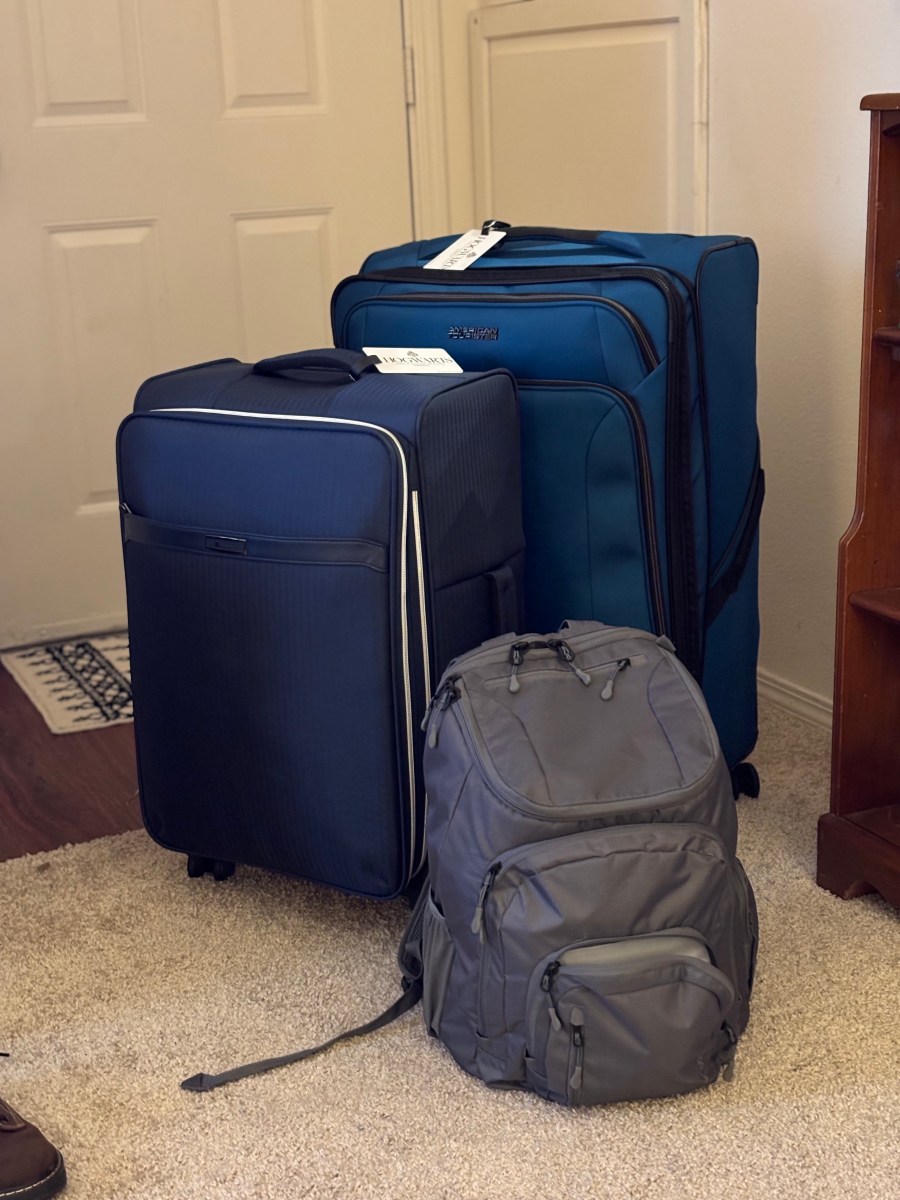
This was challenging. I needed clothes for two seasons: Winter into Spring, but mostly Winter. I also needed all the cosmetic and medical things that I wasn’t sure I could get easily over there. Was I overpacked? Definitely. And I won’t do it that way again. But having everything at my fingertips this first time was really important to me.
Emergency Plans
Or… “What would happen in the unfortunate and equally unlikely event that something horrible happened to me over there?”
I wouldn’t be alone over there… not really… but it didn’t seem fair, either, to give the German a list a mile long of people to contact to organize everything from getting me back to the States to finding medical care, to making sure my apartment (and its contents) didn’t fall into the wrong hands.
So I gave Cole’s information to The German and set up a hierarchy call system in the States. I gave the Inner Circle’s information, along with some of my family members’, to Cole, along with instructions for where to find everything important in apartment, if it came down to it. That way The German only needed to reach out once, then Cole could organize on the domestic side.
Likewise, The German (at his own suggestion) created a data sheet of all of his information and told me to give it to whoever needed it. I gave it to Cole for safe keeping. He’d know what to do if something went awry.

And with all those things in place, along with a few general travel necessities – a larger suitcase, luggage scale, my Nintendo Switch, a tablet with my streaming services (the ones that would still work) and a bag of homemade Rice Krispie treats as travel sustenance for the plane, I was ready to go.
Or… well… I thought I was.
But I’ll tell you about that next time.
 Project TMI